Malignant Narcissism – Key Traits, Warning Signs, and How to Cope
Malignant narcissism goes beyond ordinary self-centeredness. It blends grandiosity, a lack of empathy, antisocial tendencies, and even sadistic behavior into a pattern that can deeply harm the people closest to the person who displays it. If you have noticed these kinds of behaviors in someone you care about — or you are beginning to question patterns in yourself — you are not alone in seeking clarity. This guide breaks down what malignant narcissism actually means, the traits that set it apart from standard narcissism, and concrete steps you can take to protect your well-being. Along the way, you can explore the NPD self-reflection test to organize your thoughts in a structured, confidential way.

What Does Malignant Narcissism Mean?
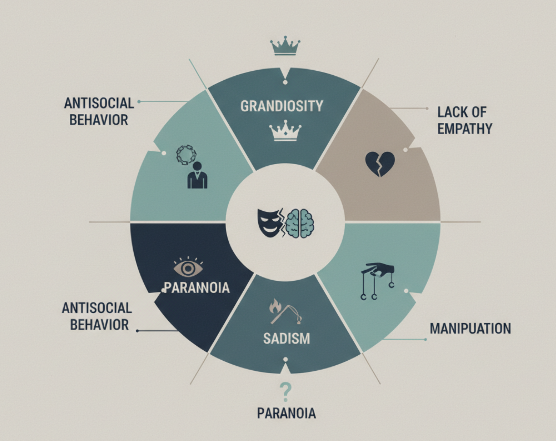
Malignant narcissism is a term first introduced by social psychologist Erich Fromm in 1964 and later expanded by psychoanalyst Otto Kernberg. It describes a severe form of narcissistic personality that combines four overlapping features:
- Narcissistic personality traits — an inflated sense of self-importance and a constant need for admiration.
- Antisocial behavior — a willingness to exploit, deceive, or violate the rights of others.
- Paranoia — persistent suspicion that others are plotting against them.
- Sadism — deriving satisfaction from controlling, humiliating, or causing pain to others.
It is important to note that malignant narcissism is not a formal diagnosis listed in the DSM-5-TR. However, mental health professionals widely recognize it as a particularly destructive cluster of personality traits that sits at the more severe end of the narcissistic spectrum.
Because it combines elements from several recognized personality disorders, understanding the malignant narcissism definition requires looking at how these traits interact — rather than examining each one in isolation.
Core Malignant Narcissism Traits and Characteristics
Recognizing malignant narcissism characteristics early can help you set boundaries and protect your emotional health. Below are the traits that distinguish this pattern from everyday narcissism.
Grandiosity Paired with Entitlement
A person with malignant narcissism often believes they are uniquely superior. This goes beyond healthy confidence. They may expect special treatment, dismiss others' accomplishments, and react with rage when they do not receive the admiration they feel they deserve.
Lack of Empathy and Emotional Coldness
While many people with narcissistic tendencies struggle with empathy, the malignant narcissism meaning includes a more deliberate disregard for others' feelings. They may understand what you are feeling but simply choose not to care — or may even use that understanding against you.
Manipulative and Exploitative Behavior
Manipulation is a central feature. This can include gaslighting, lying, playing people against each other, or using emotional blackmail. The goal is nearly always to maintain power and control.
Sadistic Tendencies
One of the most distinguishing signs of malignant narcissism is the presence of sadism. Unlike someone who hurts others unintentionally through self-centeredness, a malignant narcissist may take genuine pleasure in causing suffering — whether emotional, psychological, or sometimes physical.
Paranoia and Distrust
Chronic suspicion is common. They may accuse partners, friends, or colleagues of disloyalty without evidence. This paranoia often drives controlling behavior, as they attempt to prevent perceived threats.
Antisocial and Rule-Breaking Patterns
Malignant narcissism symptoms frequently overlap with antisocial personality patterns. This can manifest as chronic dishonesty, disregard for laws or social norms, impulsivity, and a complete absence of remorse.
How Malignant Narcissism Differs from Standard Narcissism
Many people wonder about the difference between malignant narcissism vs narcissism. While both share core narcissistic features — grandiosity, need for admiration, and reduced empathy — malignant narcissism adds layers that make it far more harmful.
| Feature | Standard Narcissism (NPD) | Malignant Narcissism |
|---|---|---|
| Grandiosity | Present | Present and more rigid |
| Empathy deficit | Reduced | Severely lacking or weaponized |
| Manipulation | Common | Strategic and deliberate |
| Sadism | Typically absent | Often present |
| Paranoia | Occasional | Persistent |
| Antisocial behavior | Mild or absent | Frequently present |
| Remorse | Limited | Usually absent |
In short, someone with standard NPD may hurt others as a byproduct of their self-focus. A malignant narcissist may hurt others intentionally — and feel justified or even gratified in doing so.
Understanding malignant narcissism vs psychopathy is also helpful. While both involve antisocial traits and a lack of empathy, psychopathy tends to involve more calculated, emotionally detached behavior. Malignant narcissism retains the narcissistic core — the desperate need for admiration and the fragile self-image underneath the grandiosity.
What Triggers a Malignant Narcissist?
Understanding triggers can help you anticipate and manage difficult situations. Common triggers include:
- Perceived criticism or rejection. Even mild feedback can feel like a devastating attack on their self-image.
- Loss of control. When they cannot dictate outcomes or other people's behavior, they may escalate to intimidation or punishment.
- Being exposed or embarrassed. Public situations where their flaws become visible can trigger intense rage.
- Witnessing others' success. Another person's achievement may feel like a personal threat, sparking envy and retaliatory behavior.
When triggered, a malignant narcissist may respond with explosive anger, silent punishment, smear campaigns, or manipulative tactics designed to re-establish dominance. Recognizing these patterns is the first step toward protecting yourself.
Malignant Covert Narcissism — The Hidden Variant
Not all malignant narcissism looks loud and obvious. Malignant covert narcissism presents with a quieter, more passive exterior — but the internal dynamics can be equally destructive.
A covert malignant narcissist may:
- Play the victim to control others' behavior.
- Use guilt, passive-aggression, or emotional withdrawal as weapons.
- Harbor deep resentment and fantasies of retaliation.
- Appear humble or self-deprecating while secretly believing they are superior.
This variant is often harder to recognize, which can make it more damaging in close relationships. If you feel chronically confused, guilty, or emotionally drained around someone who presents as gentle or wounded, covert malignant narcissism may be worth exploring as a framework for understanding the dynamic.

How to Cope with a Malignant Narcissist
If you are dealing with a malignant narcissist — whether a partner, family member, or colleague — here are practical strategies that can help you protect your well-being.
Set Firm and Consistent Boundaries
Decide what behavior you will and will not accept. Communicate your boundaries clearly, and follow through with consequences when they are crossed. A malignant narcissist will test limits repeatedly, so consistency is essential.
Limit Emotional Engagement
Avoid getting drawn into arguments designed to confuse, exhaust, or provoke you. The "gray rock" technique — becoming as uninteresting and non-reactive as possible — can reduce the emotional supply they seek.
Document Patterns
Keep a private record of troubling interactions. This helps you stay grounded in reality when gaslighting makes you question your own perceptions. It can also be valuable if you ever need evidence for legal or custody situations.
Build a Support Network
Isolation is one of the malignant narcissist's most effective tools. Stay connected with trusted friends, family members, or a therapist who understands narcissistic dynamics.
Know When to Walk Away
In some situations, the safest and healthiest option is to end the relationship. If you are experiencing abuse — emotional, psychological, or physical — your safety comes first. A mental health professional can help you create a safe exit plan.
This content is for educational purposes and self-understanding. It is not a substitute for professional mental health advice, diagnosis, or treatment. If you are in an unsafe situation, please reach out to a crisis helpline or mental health professional.
Explore Your Patterns with a Confidential Self-Reflection Tool
Understanding narcissistic traits — whether in yourself or someone close to you — is a process that takes time and honesty. Sometimes, a structured framework can help you organize your observations and reflect more clearly.
The NPD screening tool on Npdtest.org offers a free, confidential self-assessment based on recognized psychological frameworks. It is not a diagnosis and does not replace professional evaluation. Instead, it provides a starting point for self-awareness — helping you identify patterns, consider their impact, and decide whether further exploration with a professional might be helpful.
There is no pressure to act on the results. Think of it as one small step toward greater clarity.
When to Seek Professional Help
Self-reflection tools and educational articles are valuable, but they have limits. Consider reaching out to a licensed mental health professional if:
- You recognize several malignant narcissism traits in yourself and want to understand them better.
- You are in a relationship with someone whose behavior matches these patterns, and it is affecting your mental or physical health.
- You feel trapped, confused, or afraid.
- You have noticed your own empathy, honesty, or emotional regulation declining under stress.
A trained therapist — particularly one experienced in personality disorders or trauma recovery — can provide the individualized support that no article or online tool can fully replace.
Key Takeaways on Malignant Narcissism
Malignant narcissism represents a severe and complex cluster of personality traits that goes well beyond everyday self-centeredness. It involves grandiosity, deep empathy deficits, manipulative and exploitative behavior, paranoia, and often a sadistic dimension that sets it apart from standard narcissistic personality disorder.
Whether you are trying to understand someone in your life or exploring your own patterns, awareness is the foundation of change. Educate yourself, set boundaries, seek support, and remember that taking a confidential NPD self-assessment can be a helpful first step toward organizing your thoughts — not a final answer, but a beginning.
Frequently Asked Questions
What are the 9 traits of malignant narcissism?
While there is no single official list, commonly cited traits include grandiosity, lack of empathy, manipulation, exploitation, sadism, paranoia, antisocial behavior, a need for control, and absence of remorse. These traits exist on a spectrum, and not every person will display all of them.
Is malignant narcissism the same as psychopathy?
They share features like reduced empathy and antisocial behavior, but malignant narcissism retains a strong narcissistic core — including fragile self-esteem and a desperate need for admiration. Psychopathy tends to involve more emotional detachment and calculated behavior.
Can a malignant narcissist change?
Change is possible but uncommon, largely because self-awareness and genuine motivation are prerequisites for effective therapy. Approaches like dialectical behavior therapy may help with emotional regulation, but progress depends heavily on the individual's willingness to engage honestly.
What is the difference between malignant narcissism and sociopathy?
Malignant narcissism vs sociopathy is a common comparison. Sociopathy (antisocial personality disorder) focuses primarily on rule-breaking and disregard for others' rights. Malignant narcissism adds narcissistic grandiosity, a need for admiration, and often sadistic tendencies on top of those antisocial patterns.
How do you protect yourself from a malignant narcissist?
Set firm boundaries, limit emotional engagement, document problematic behavior, maintain a strong support network, and seek guidance from a therapist experienced in narcissistic abuse. If you feel unsafe, prioritize your physical safety above all else.
What causes malignant narcissism?
Research suggests a combination of genetic predisposition, early childhood experiences (such as severe neglect, abuse, or excessive indulgence), and environmental factors. No single cause has been identified, and professional assessment is needed to understand individual cases.