Is Narcissism Genetic: Unpacking the Science of Nature vs. Nurture
Have you ever looked at a parent or relative and wondered, "Is narcissism genetic?" It’s a common question, especially if you’ve noticed similar self-centered traits echoing through your family tree. Understanding the origins of personality is crucial, not just for satisfying curiosity, but for making sense of your own behaviors and relationships.
This article dives deep into the science behind Narcissistic Personality Disorder (NPD). We will explore the complex interplay between your DNA and your upbringing. You will learn about the latest research on heritability, how parenting styles act as triggers, and practical ways to distinguish genetic traits from learned habits. Finally, we’ll guide you on how to safely explore your own personality blueprint.
Is Narcissism Genetic or Learned? The Short Answer
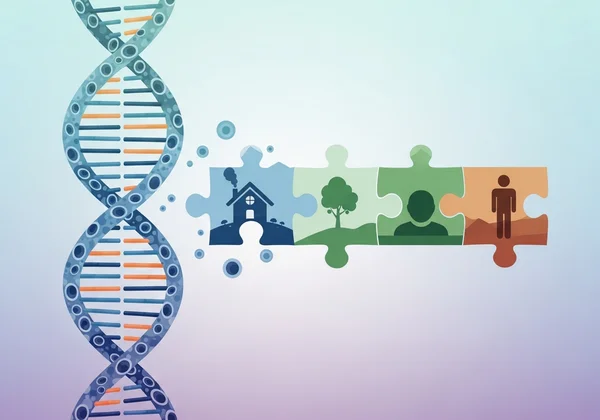
The debate over whether narcissists are born or made doesn't have a simple black-and-white answer. The most accurate scientific consensus is that narcissism is both genetic and learned. It is rarely just one or the other. Instead, think of it as a collaboration between your biological blueprint and your life experiences.
Research suggests that while you might be born with a higher sensitivity or a specific temperament, your environment—how you were raised, your relationships, and your culture—acts as the sculptor. This means that having a genetic predisposition does not guarantee someone will develop Narcissistic Personality Disorder (NPD).
Genetic Heritability Estimates: The 40-60% Rule
When scientists ask, "Is narcissism genetic?" they often refer to "heritability." Studies on personality disorders generally estimate the heritability of narcissism to be around 40% to 60%. This suggests that roughly half of the variance in narcissistic traits across the population can be attributed to genetic factors.
This percentage is significant. It places narcissism on par with many other personality traits and mental health conditions in terms of genetic influence. However, it also leaves a massive 40-60% chunk that is determined by non-genetic factors, such as your upbringing and life events.
Nature vs. Nurture: The "Gun and Trigger" Interaction
To understand how this works, psychologists often use a powerful metaphor: "Genetics loads the gun, but environment pulls the trigger."
- The Gun (Nature): You may inherit a biological vulnerability. For example, you might be born with a temperament that is more aggressive, less empathetic, or highly sensitive to criticism.
- The Trigger (Nurture): These genetic potentials might remain dormant unless activated by specific environmental stressors, such as childhood neglect, trauma, or excessive pampering.
Without the trigger, the genetic potential may never fully manifest as a disorder. This interaction explains why one sibling might develop NPD while another, raised in the same home, does not.
Is Narcissistic Personality Disorder (NPD) Genetic? Scientific Evidence
While we know there is a genetic component, is there concrete proof? Scientists have spent decades trying to pinpoint exactly how narcissism is passed down. The evidence for is NPD genetic comes primarily from studying families and looking inside the brain itself.
Current research supports the idea that NPD is a heritable condition, but it is "polygenic." This means there isn't a single "narcissism gene" you can test for. Instead, thousands of small genetic variations likely combine to increase the risk.
Insights from Twin Studies on Narcissism
Twin studies are the gold standard for separating nature from nurture. Researchers compare identical twins (who share 100% of their DNA) with fraternal twins (who share about 50%).
If narcissism were purely learned, identical twins and fraternal twins raised in the same household should show similar rates of narcissism. However, studies consistently show that identical twins are much more likely to share narcissistic traits than fraternal twins. This gap strongly points to a genetic foundation for personality disorders, confirming that biology plays a undeniable role.
Brain Structure Differences and Genetic Predisposition
Neuroscience has also uncovered physical differences in the brains of people with NPD. Scans have shown:
- Reduced Grey Matter: Areas of the brain associated with empathy (like the left anterior insula) often have less grey matter volume in narcissists.
- Connectivity Issues: The neural pathways connecting fear responses to emotional regulation may function differently.
These structural differences are often influenced by genetics. If a person inherits a brain structure that struggles with empathy or emotional regulation, they have a higher genetic predisposition for developing narcissistic behaviors as a coping mechanism.

Environmental Triggers: Can Parenting Styles Cause Narcissism?
Environment shapes personality just as much as DNA. When asking can parenting styles cause narcissism, research points to two damaging extremes that distort a child's self-view:
Impact of Neglect vs. Overvaluation
- Childhood Neglect: When parents are cold or distant, a child may develop narcissism as a defense mechanism. They strive to be "perfect" just to earn attention, building a grandiose shell to protect a fragile heart.
- Parental Overvaluation: Conversely, excessive, unrealistic praise teaches a child they are superior to others. This isn't love; it breeds entitlement and an inflated sense of self-importance.
Childhood Trauma as a Risk Factor for NPD
Beyond parenting, childhood trauma is a potent catalyst. Physical or emotional abuse disrupts development. To survive an unsafe world, a child may create a "narcissistic armor"—a persona that is powerful, untouchable, and needs no one.
Self-Reflection: Did You Experience These Environmental Factors?
Reflecting on your upbringing can reveal patterns. Did you experience:
- Conditional Love: Was affection tied solely to achievements?
- Lack of Boundaries: Were you rarely told "no"?
- Invalidation: Were your feelings constantly dismissed?
- Vicarious Pressure: Did parents live through your success?
Answering "yes" isn't a diagnosis, but it highlights how your past environment may have influenced your current traits.
Does Narcissism Run in Families? Understanding Inheritance
A very common worry is: "Does narcissism run in families?" If you have a narcissistic parent, it is natural to fear that you are destined to become one, or that you might pass it on to your children.
The short answer is yes, it often runs in families. But remember the distinction between genetics and learning. You inherit DNA, but you also "inherit" habits, coping mechanisms, and communication styles by observing your parents.
Is Narcissism Inherited From Mother or Father?
There is no scientific evidence suggesting that is narcissism inherited from mother or father specifically. The genetic risk is equal from both sides.
However, the expression of narcissism might look different depending on the role model. A narcissistic father might model grandiose, aggressive entitlement, while a narcissistic mother might model covert, martyr-like manipulation. Children often model the behavior of the same-sex parent more closely, but the genetic transmission risk is gender-neutral.
Breaking the Cycle: Why Family History is Not Destiny
This is the most important takeaway: Biology is not destiny.
Just because you have a genetic predisposition or a family history of NPD does not mean you will develop the disorder. You have something your genes don't: awareness.
- Plasticity: Your brain can change and adapt throughout your life (neuroplasticity).
- Choice: You can choose to learn new behaviors, practice empathy, and seek therapy.
- Environment: You can create a different environment for yourself and your children than the one you grew up in.
Recognizing the pattern is the first step in breaking the cycle.
Recognizing Signs of Narcissism: Genetic Traits vs. Habits
Before you can address narcissism, you need to recognize it. It can be tricky to separate genetic traits (like high sensitivity or low agreeableness) from learned narcissistic habits.
Everyone has some narcissistic traits—it's part of being human. Healthy narcissism allows us to feel proud of our achievements and take care of ourselves. Pathological narcissism is different.
Common Narcissistic Traits and Behaviors
When looking for signs, consider these core traits commonly associated with NPD:
- Grandiosity: An exaggerated sense of self-importance.
- Need for Admiration: A constant craving for praise and validation.
- Lack of Empathy: Difficulty recognizing or caring about the feelings of others.
- Entitlement: Believing you deserve special treatment without earning it.
- Exploitative Behavior: Taking advantage of others to achieve your own ends.
Distinguishing Healthy Confidence from Pathological Narcissism
How do you know if it's confidence or narcissism?
- Healthy Confidence: Is based on reality and past achievements. It allows you to celebrate others' success and admit mistakes.
- Pathological Narcissism: Is fragile and based on fantasy. It requires putting others down to feel superior and reacts with rage or shame when criticized.
If your self-esteem feels like a rollercoaster that depends entirely on others' opinions, it might be worth exploring further.

Taking a Narcissism Test: Tools for Self-Discovery
If you've read this far, you might be seeing reflections of yourself or a loved one in these descriptions. That is completely normal. The best way to move from uncertainty to clarity is to gather more objective information.
Using an educational tool can help you separate general anxiety from specific traits.
How an Online Assessment Helps You Understand Your Traits
An online assessment acts as a mirror. It asks standardized questions that you might not think to ask yourself. Instead of guessing, you get a structured look at your personality patterns.
These tools are designed to identify traits, not to label you as a "bad person." They measure where you fall on the spectrum of narcissism, helping you understand your unique profile.
Using the Npdtest.org Screening Tool
At Npdtest.org, we offer a specialized screening tool designed to help you explore your personality.
This narcissism test is built on established psychological criteria. It is free, private, and takes just a few minutes to complete. By answering a series of questions about your behaviors, feelings, and relationships, you can gain immediate insight into your personality structure.
Interpreting Your Results: Educational Insights
It is important to remember that our tool is educational. It provides a "risk score" or a profile of traits, but it is not a medical diagnosis.
- High Score: Indicates you have many traits consistent with narcissism. It suggests that you might benefit from speaking with a mental health professional.
- Low Score: Suggests your traits are likely within the normal range, or related to other factors like high confidence or stress.
Regardless of the result, the goal is self-discovery. Knowing your baseline allows you to take control of your personal growth. Explore Your Traits with Our Free Assessment.
Is Genetic Narcissism Treatable? Management and Change
Finally, let's address the question of hope. If narcissism is partly genetic, is genetic narcissism treatable? Absolutely. Genetic does not mean permanent.
Therapeutic Approaches for Managing Narcissistic Personality Disorder
Therapy is highly effective for managing narcissistic traits.
- Cognitive Behavioral Therapy (CBT): Helps identify and change negative thought patterns.
- Dialectical Behavior Therapy (DBT): Focuses on emotional regulation and tolerating distress.
- Schema Therapy: specifically targets the deep-seated emotional wounds (often from childhood) that drive narcissistic behavior.
The Importance of Professional Support
Changing deep-rooted personality traits is hard work. It is rarely something you can do entirely on your own. A licensed therapist provides the safe, non-judgmental space needed to unpack both the genetic and environmental factors at play. They act as a guide, helping you rewire those "triggered" responses into healthier habits.
Final Thoughts: Understanding Your Unique Blueprint
So, is narcissism genetic? The science tells us it is a complex mix of your DNA and your life story. You may have inherited the "gun," but your experiences pulled the "trigger."
Understanding this removes the shame. It's not about being "born bad." It's about understanding your unique blueprint so you can build a better structure upon it. Whether you are worried about yourself or your family, knowledge is power.
Your genes are just the starting point. The rest of the story is yours to write.
Frequently Asked Questions
What is the root cause of narcissism?
The root cause is a combination of bio-psycho-social factors. This means biological genetics (approx. 50%), psychological temperament, and social upbringing (parenting and trauma) all interact to cause the disorder.
Is there a single narcissism gene?
No. Research indicates that narcissism is polygenic, meaning it involves hundreds or thousands of different genes (like those regulating dopamine or oxytocin) interacting with each other, rather than one single "switch."
At what age does narcissism typically develop?
Narcissistic traits often begin to emerge in adolescence or early adulthood. While children can show narcissistic behaviors, personality disorders are typically not diagnosed until adulthood (age 18+) when personality becomes more fixed.
If my parent has NPD, will I have it too?
Not necessarily. You have a higher risk due to shared genetics and environment, but it is not a guarantee. Many children of narcissists become highly empathetic ("empaths") as a reaction to their upbringing.
Can you unlearn narcissistic behaviors?
Yes. Through neuroplasticity and therapy, individuals can learn empathy, better emotional regulation, and healthier relationship skills. It requires consistent effort and a willingness to change.