Do Narcissists Change — What the Evidence Really Shows
You've watched the same cycle play out — the grand promises, the brief calm, and then the same hurtful patterns all over again. Whether you're wondering about a partner, a parent, or even yourself, the question "do narcissists change" carries real emotional weight. The honest answer is nuanced. Change is possible, but only under very specific conditions that most people never hear about. In this guide, you'll learn why narcissistic patterns resist change, what must happen for genuine growth to begin, and how to separate real transformation from surface-level performances. You'll also find practical steps if you explore narcissistic traits with our free NPD screener and recognise patterns in yourself.

What Makes Narcissistic Patterns So Resistant to Change
Before asking whether narcissists ever change, it helps to understand why these patterns are so persistent. Narcissistic behaviours are not random habits. They are deeply wired defence mechanisms that developed — often in childhood — to protect against emotional vulnerability.
How Shame and Ego Defence Block Self-Awareness
At the core of most narcissistic patterns lies a fragile sense of self. When someone challenges a narcissist's behaviour, the response is rarely curiosity. Instead, it triggers intense shame, which the brain immediately converts into defensiveness, rage, or dismissal.
This shame-defence loop makes honest self-reflection feel genuinely threatening. For the narcissist, admitting a flaw does not feel like growth — it feels like annihilation. As a result, even well-meaning feedback gets blocked before it ever reaches awareness.
Why Blame-Shifting Feels Safer Than Self-Reflection
When accountability feels dangerous, blame-shifting becomes the default. A narcissist may redirect responsibility onto their partner, their upbringing, or the situation — anything to avoid sitting with the discomfort of personal fault.
This is not always deliberate manipulation. In many cases, it is an automatic pattern so deeply ingrained that the person genuinely believes the problem lies elsewhere. Until this externalisation pattern is disrupted, do narcissists change? Rarely in any meaningful way.
Narcissistic Traits vs NPD — Why the Distinction Matters for Change
Not everyone who displays narcissistic behaviour has Narcissistic Personality Disorder. Understanding where someone falls on the spectrum is essential for setting realistic expectations.
Where Narcissism Falls on the Spectrum
Narcissism exists on a continuum. On one end, you'll find everyday self-centredness — a tendency to dominate conversations, seek praise, or struggle with empathy in stressful moments. On the other end sits clinical NPD, a diagnosable personality disorder characterised by pervasive grandiosity, a deep need for admiration, and a consistent lack of empathy.
Most people who search "do narcissists ever change" are thinking about someone who falls somewhere in between — not diagnosable, but clearly causing harm.
Why Someone with Traits May Respond Differently Than Someone with NPD
People with narcissistic traits — rather than full NPD — tend to retain more capacity for self-awareness and emotional flexibility. When they face consequences, they may genuinely reflect on their role. They might seek therapy and stick with it.
For someone with clinical NPD, the barriers are significantly higher. The disorder itself disrupts the very self-awareness needed to recognise that change is necessary. This does not mean change is impossible, but it does mean the path is longer, harder, and far less certain.
What Conditions Must Be Present for a Narcissist to Change
Do narcissistic people ever change? They can — but only when specific conditions align. Wishful thinking, ultimatums, or love alone are rarely enough.
Internal Motivation vs External Pressure
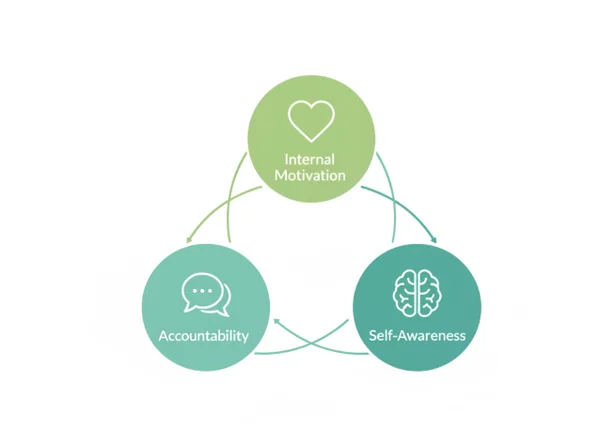
Lasting change requires motivation from within. A narcissist who modifies behaviour solely to avoid losing a job, a partner, or social status is managing consequences — not genuinely growing.
True motivation looks different. It usually involves a deep, sometimes painful, recognition that their patterns are causing harm to people they value. Without this internal shift, any behavioural changes tend to be temporary.
The Role of Relational Consequences and Emotional Pain
Change often begins at a breaking point. Losing a close relationship, experiencing sustained social rejection, or facing the cumulative weight of isolation can sometimes crack through narcissistic defences.
However, consequences alone are not enough. They need to be paired with an environment — such as therapy — where the person can safely explore what went wrong without retreating into blame or denial.
Why Accountability Is Non-Negotiable
Genuine change requires accepting responsibility — repeatedly, consistently, and without qualifiers. A narcissist who says "I'm sorry you felt that way" is deflecting, not apologising.
Real accountability sounds more like: "I understand what I did. I understand the impact. I'm working to change that pattern." If this kind of ownership does not emerge, the change is likely cosmetic.
How Therapy Can Help — and Where It Falls Short
Can therapy help a narcissist change? It can — but the outcomes depend heavily on the person's willingness to stay in the process.
Therapy Approaches Used for Narcissistic Patterns
Several evidence-informed approaches may help individuals with narcissistic patterns:
- Cognitive Behavioural Therapy (CBT): Helps identify and restructure distorted thinking patterns, such as entitlement beliefs or all-or-nothing evaluations of others.
- Dialectical Behaviour Therapy (DBT): Focuses on emotional regulation and distress tolerance — two areas where narcissistic individuals often struggle.
- Psychodynamic therapy: Explores early relational wounds that may have contributed to the development of narcissistic defences.
- Schema therapy: Targets deep-seated emotional schemas — such as defectiveness or emotional deprivation — that drive narcissistic compensation.
Why Drop-Out Rates Remain High
Even when a narcissist enters therapy, staying in it is another challenge entirely. Therapy requires vulnerability, and vulnerability is precisely what narcissistic defences are built to avoid.
Many individuals with narcissistic patterns leave therapy when it becomes uncomfortable — when the therapist challenges their self-image or when progress feels too slow. Drop-out rates for personality-related therapy are notably higher than for other mental health conditions.
Realistic Timelines for Noticeable Change
Change in narcissistic patterns does not happen in weeks or even months. Meaningful shifts in behaviour, emotional regulation, and relational patterns typically require sustained therapeutic work over one to several years.
Even then, change tends to be incremental rather than dramatic. Partners and family members hoping for a complete transformation should understand that progress may look like fewer eruptions, slightly more awareness, or brief but genuine moments of empathy — not a personality overhaul.
Surface Apologies vs Real Change — How to Tell the Difference
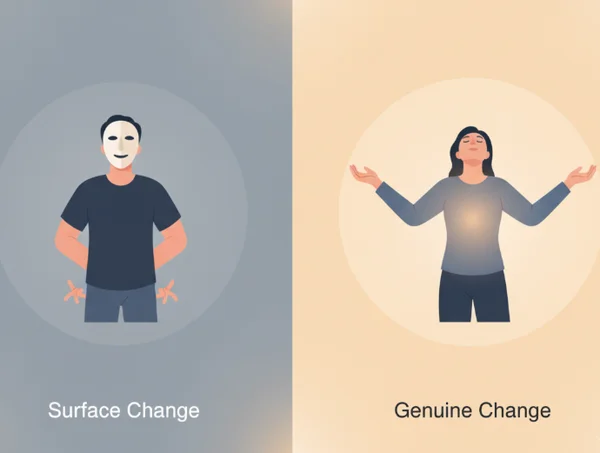
One of the most common questions people ask is: how do you know if a narcissist has really changed? The distinction between surface-level adjustments and genuine growth is critical — and often hard to see in the moment.
Red Flags That Suggest Performative Change
Watch for these patterns, which often indicate that the "change" is strategic rather than genuine:
| Surface Change Pattern | What It Really Means |
|---|---|
| Apologies only after being caught | Damage control, not self-reflection |
| Change lasts only during a crisis | Behaviour reverts once consequences ease |
| Uses therapy language to deflect | "I'm working on myself" replaces real accountability |
| Focuses on how they feel about hurting you | Centres their experience, not yours |
| Grand gestures without daily follow-through | Performance over consistency |
Green Flags That Point to Genuine Growth
Genuine change tends to be quieter, more consistent, and less dramatic. Signs a narcissist is changing in meaningful ways may include:
-
Taking responsibility without being confronted first
-
Tolerating criticism without erupting or withdrawing
-
Showing curiosity about how their behaviour affects others
-
Maintaining changed behaviour over months, not just days
-
Staying in therapy even when it feels uncomfortable
-
Apologising specifically — naming what they did and the impact
Do Narcissists Change as They Get Older
Do narcissists change as they get older? Research offers a nuanced answer that may surprise you.
What Research Says About Narcissism and Aging
Studies suggest that certain narcissistic traits — particularly those tied to antagonism, exploitation, and emotional volatility — tend to decline naturally across the lifespan. As people age, social feedback, accumulated losses, and shifting priorities may gradually reduce some of the more overt narcissistic behaviours.
However, this finding applies primarily to traits, not to the full disorder. Someone with clinical NPD may soften in some areas while remaining rigid in others, particularly if they never sought treatment.
Why Aging Alone Does Not Guarantee Change
A natural decline in certain traits should not be confused with genuine personal growth. An older narcissist may become less explosive but still lack empathy. They may stop seeking constant admiration but continue to manipulate quietly.
Aging can create opportunities for reflection, but without active effort — therapy, deliberate self-examination, willingness to be vulnerable — the core relational patterns often persist.
Steps to Take if You Recognise Narcissistic Patterns in Yourself
If you're reading this and thinking, "I am a narcissist — how do I change?" — that awareness itself is a meaningful starting point. Not everyone with narcissistic patterns is unwilling to grow. Here's how to begin.
A Self-Check Readiness List for Honest Reflection
Before pursuing therapy or any structured approach, consider these reflection questions. They are not a diagnosis — they are a way to organise your thoughts:
- Do I regularly dismiss feedback from people close to me?
- Do I find it difficult to sit with feelings of being wrong?
- Have I lost relationships because of patterns I keep repeating?
- Am I willing to feel uncomfortable in order to grow?
- Can I tolerate hearing how my behaviour affects others — without defending myself?
If several of these resonate, it may be worth exploring further with a structured self-reflection tool or a therapist who specialises in personality patterns.
How a Structured Screener Can Help Organise Your Thoughts
Sometimes the hardest part of change is knowing where to start. A structured screener — like the free NPD self-reflection tool on Npdtest.org — can help you organise scattered concerns into a clearer picture.
This type of tool is not a clinical diagnosis. It is designed as an educational self-reflection resource based on DSM-5-TR frameworks, helping you identify patterns worth discussing with a mental health professional.
When Understanding Narcissism Becomes a Path Forward
Do narcissists change? The evidence says they can — but only when the right conditions are in place. Change requires self-awareness, sustained internal motivation, professional support, and a willingness to endure genuine discomfort.
For those observing from the outside, the most important skill is learning to distinguish surface performances from real growth. For those looking inward, the most courageous step is simply acknowledging that patterns exist.
Whatever your situation, understanding narcissistic patterns is never wasted. It helps you make informed decisions — about your relationships, your boundaries, and your next steps. If you'd like to take the free NPD screener at Npdtest.org, it can serve as a starting point for deeper self-understanding.
This article is for educational purposes only and does not constitute a clinical diagnosis or professional mental health advice. If you are experiencing significant distress, please consult a licensed mental health professional.
Frequently Asked Questions
Can a narcissist change for the person they love?
Love alone rarely drives lasting change. While emotional attachment may motivate short-term adjustments, genuine transformation requires internal motivation, sustained therapy, and repeated accountability — regardless of who the relationship involves.
Do narcissists change for a new partner or new supply?
A narcissist may appear different with a new partner, but this often reflects the idealisation phase rather than real change. Once initial excitement fades, established patterns tend to resurface.
Do narcissists change after marriage?
Marriage itself does not change narcissistic patterns. In some cases, the commitment and proximity of marriage can intensify controlling or dismissive behaviours, especially if the narcissist feels their partner cannot easily leave.
Do covert narcissists change differently than grandiose narcissists?
Covert narcissists may be slightly more open to recognising their pain, which can make them more receptive to therapy. However, their tendency toward passive aggression and emotional withdrawal presents its own treatment challenges.
Do female narcissists ever change?
Narcissistic patterns follow the same change dynamics regardless of gender. Female narcissists face the same barriers — shame, ego defence, lack of self-awareness — and require the same conditions for genuine transformation.
Do narcissists know they are narcissists?
Some do. Research suggests many individuals with narcissistic traits can acknowledge being narcissistic when asked directly. However, this self-awareness does not automatically translate into motivation to change.
Can narcissism be cured?
NPD is not typically described as curable in clinical literature. However, narcissistic traits and behaviours can be meaningfully managed through sustained therapeutic work, leading to healthier relationships and improved self-regulation.